An Organic Vegetable Garden | The Attainable Dream
Organic Vegetables
Few things are better than picking a fresh vegetable and taking a bite out of it … in your own backyard garden! Since plant nutrients are met primarily from natural sources, it can be surprisingly easy to grow organic produce in your own backyard.
There are some key elements to growing organically and how they can work together to help you produce a harvest of natural delight. Don’t get me wrong, you will find many challenges along the way, but remember organic gardening is a long game. With proper information and care, it can be done!
Deciding on a Site
Consider light exposure, soil drainage and fertility. Is there existing pesticide contamination? You need a minimum of 6 hours of full sun each day. Soil clear of water pools to avoid root rot. If other plants are growing healthily in the site, it likely has good fertility.
Quality Soil and Nutrients
In conventional gardening, fertilizers are used to directly feed the plant, whereas in organic gardening the strategy is to feed the soil: the soil will, in turn, feed the plant.
A layer of natural mulch can be used to control weeds and conserve moisture in the soil, helping to keep roots hydrated. With less evaporation, that means less watering and as natural mulch decomposes, it also adds nutrients back to the soil. Compost and worm castings can also be used to recharge and energize soil.
Managing Pests
The first line of defense against pests is a preventative strategy that makes the plants or environment less desirable to the pest. Insects and disease tend to attack weak plants and weak soil, hence if your soil is strong and healthy, your plants will be too. This is like natural immunity for your plants.
There are multiple strategies to target specific pests. Remember that spraying doesn’t only kill the bad insects, but the good ones too. And the more you spray, the more you upset the balance of nature. Some strategies include biological control, or use of predatory insects and fungi, as well as chemicals that meet the National Organic Standard.
Rotate your Crops
If you keep planting your crops in the same spot every year your garden productivity will suffer. Crop rotation and cover crops are two of the most important methods a gardener can practice that will keep their garden healthy and productive. Cover crops can add important nutrients back to the soil.
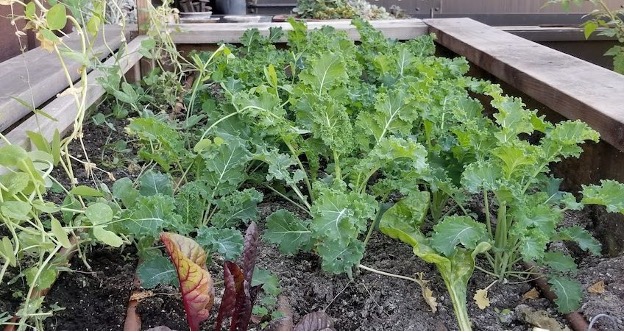
Install Raised Beds
Gardens for Texas has helped many clients to get started with their organic veggie gardens by constructing and installing raised beds. If you are interested, let us know. We can get you an estimate then send our crew.
Lake Highlands Community Garden
For over 10 years, Gardens for Texas has maintained three plots at this organic community garden not far from our headquarters office. Sandra and Jamie love to grow organic veggies, lettuces, tomatoes, lemon grass, and more! If you do not have room in your garden to grow veggies, or just want to learn about organic gardening from a group of knowledgable enthusiasts, consider a plot. They also have a robust volunteer program growing organic food for local food banks. Visit www.lhgarden.org to learn more.