
0 Comments
Happy New Year
Happy New Year 2026 greetings to our clients, friends and family. We look forward to creating beautiful landscapes for you in the coming year.
Happy New Year 2026 greetings to our clients, friends and family. We look forward to creating beautiful landscapes for you in the coming year.

Winter is challenging to many plants. When you are faced with a freeze event, will you be ready?
We recommend bringing all container pots inside and covering others with freeze cloth.
Don’t use plastic…. it will cause damage.
Water your plants, then secure your hose and pipes against freeze.
Plant covering should extend all the way to the ground for full protection, creating an “air pocket” around the plant that traps heat inside.
We recommend anchoring the covering as necessary to prevent it from blowing away or shifting position.
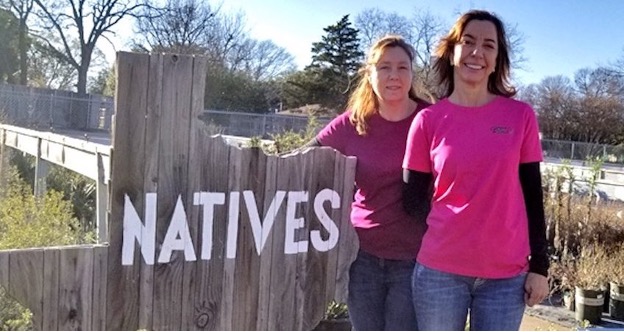
Native Plants
A native plant is local and grows naturally, without human help, in a specific area. Many have thrived and evolved there for centuries, and might include flowers, shrubs, trees, grasses, and vines. Native plants are usually part of a communal effort in the plant population, where several species might have evolved jointly to support other living creatures. Take the case of a flower that thrives in an area where a certain insect community pollinates!
Adapted to Local Environment
Compared to exotic plants, natives can tolerate drought better and may be resistant to attacks by insects and seasonal diseases. Since they have spent centuries adapting to the area’s changing conditions, native plants require less work and resources; once they become established, they don’t require extra fertilizers, winter mulching, or extra water.
Converting to Texas Native Plants
By planting them in your garden, you will be replacing lost food and homes for all kinds of wildlife. More native plants encourage our birds, pollinators and other wildlife to return and forage for food and shelter.
With this simple deed you will be helping to replace those “corridors” that many insects use when migrating or moving around our area. Monarch butterflies, for example, have seen their sources of food and local plant hosts depleted. If they find some milkweed in your garden, they can lay their eggs and load up on nectar as so many other less famous species!
Xeriscaping with Texas Native Plants
here https://www.gardensfortexas.com/texas-native-plants. View our gallery of beautiful plants and a presentation that Jamie and Sandra made at the North Haven Gardens about Xeriscaping with Texas Native Plants. It is full of ideas for converting your landscape to a drought-tolerant, native garden.
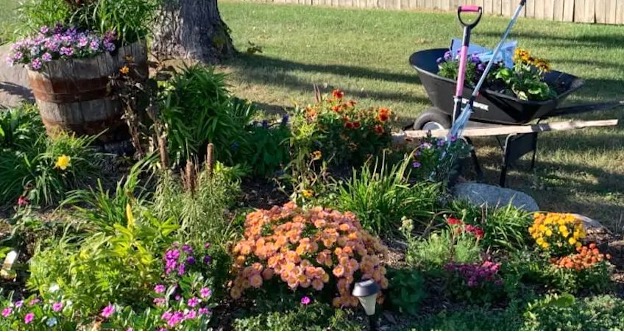
Spring is often thought of as the best time to plant, but it is the fall time planting that can give some plants a winning edge. The cooler temperatures in fall slow down new top growth, making it possible for the plants to focus on root development before the return of summer heat.
If you have been previously unsuccessful with fall planting, it may be because you have been choosing the wrong plants. Besides, it may be because you are not getting them onto the ground soon enough. Remember! In the Fall the soil is warm and promotes proper growth of roots.
Professional landscapers and yard enthusiasts prefer to plant in the Fall because:
2. Perennials, shrubs and trees get a jump start on Spring growth as colder weather is less stressful for new plants, allowing for root growth. This means that some early season wildflowers will be able to show their flowers sooner.
3. Birds, bees, butterflies, and beneficial insects can struggle to find food at the extreme ends of the gardening season. Earlier blooming plants provide crucial support to pollinators, as earlier sources for nectar are available!
4. Shorter days mean that photosynthesis slows down and cooler weather helps to eliminate evaporation, therefore new plants require less water than if planted in the spring.
5. The soil is softer in the Fall, so it’s easier to dig holes.
Water-Thirsty Lawns
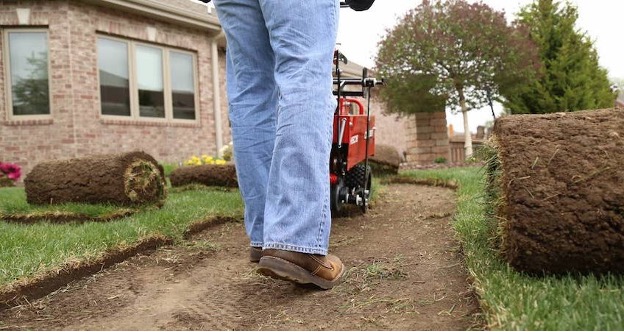
A lawn is the pride and joy of any homeowner who often makes it the focal part of their curb appeal. Grass requires a lot of water to remain lush and healthy. Day to day, people around the country run sprinklers or use watering cans, and even though the lawn looks nice, could water be saved by making some changes? If you are evaluating water consumption and expenditure reduction, here are a few things to consider:
Spray Head Irrigation System
In contrast to other plants, turf needs more water to keep it green, and the irrigation system is the usual way of delivery of this precious liquid. Typically, a system uses pop up spray heads that send water up into the air, expecting it to fall onto the ground and hopefully soak into the soil so the roots can take it up. This system wastes a lot of water due to evaporation.
Calculate Your Water Use
To calculate how much water you are using put a bucket to catch the water at one sprinkler head. An average sprinkler head uses four gallons per minute (GPM) or more. Once you know how many GPM each head is using, you can calculate how much water you are using based on how long you are running each head.
For example: If you have a zone (this is an area on your irrigation system that is controlled by one valve) that has 10 heads on it and each head is putting out four gallons per minute, you have 40 gallons of water coming out per minute for that zone. If you run that zone for eight minutes, that is 320 gallons of water that is being used to water just that one section of lawn.
Turf Alternatives
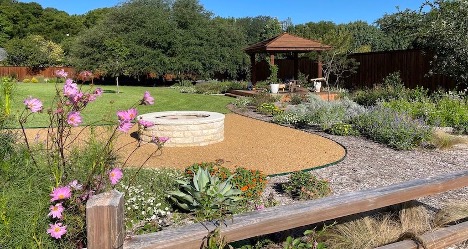
If you still want to gaze at a field of green, you can always turn to artificial turf. Not your look? you can use stones as part of your landscaping. You can cut down the size of the lawn so that it becomes the path you walk on through the garden. This is appealing for those who don’t want to get rid of their lawns entirely, but still want to reduce the amount of water used to maintain it.
Permeable hardscape and mulch include intervening walkways and seating areas where water can penetrate. Hence, bricks and flagstone can be set in sand. Gravel and decomposed granite are other examples. These elements really help to make the design more attractive.
Install Drought-Tolerant Plants
Using drought tolerant and native plants will significantly decrease your water use.
You might find that you are using fertilizers, pesticides and herbicides to maintain your lawn. Frequent watering may increase the need to weed. Over time, this should decrease as you convert to water-friendly practices.
Water Saving Techniques
A great way to decrease water use is to schedule all watering for early morning or at dusk when there is less evaporation from the warmer hours of the day.
Significant water savings can be achieved by watering by hand or changing your irrigation system to a drip system The drip irrigation system will get water where the plants need it, so less chance of water wasted by above-ground spray head evaporation. Most drip emitters use one to two gallons per hour. The drip system will require regular checking as heads can get clogged or pop off.
Organic Vegetables
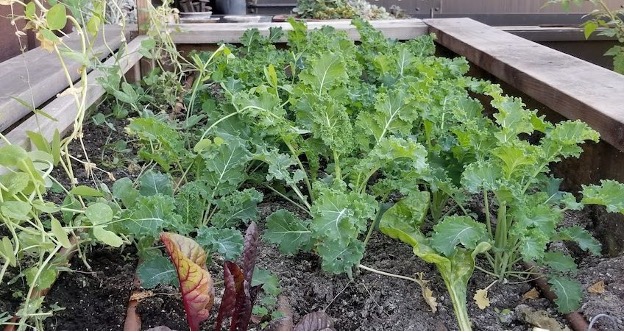
Few things are better than picking a fresh vegetable and taking a bite out of it … in your own backyard garden! Since plant nutrients are met primarily from natural sources, it can be surprisingly easy to grow organic produce in your own backyard.
There are some key elements to growing organically and how they can work together to help you produce a harvest of natural delight. Don’t get me wrong, you will find many challenges along the way, but remember organic gardening is a long game. With proper information and care, it can be done!
Deciding on a Site
Consider light exposure, soil drainage and fertility. Is there existing pesticide contamination? You need a minimum of 6 hours of full sun each day. Soil clear of water pools to avoid root rot. If other plants are growing healthily in the site, it likely has good fertility.
Quality Soil and Nutrients
In conventional gardening, fertilizers are used to directly feed the plant, whereas in organic gardening the strategy is to feed the soil: the soil will, in turn, feed the plant.
A layer of natural mulch can be used to control weeds and conserve moisture in the soil, helping to keep roots hydrated. With less evaporation, that means less watering and as natural mulch decomposes, it also adds nutrients back to the soil. Compost and worm castings can also be used to recharge and energize soil.
Managing Pests
The first line of defense against pests is a preventative strategy that makes the plants or environment less desirable to the pest. Insects and disease tend to attack weak plants and weak soil, hence if your soil is strong and healthy, your plants will be too. This is like natural immunity for your plants.
There are multiple strategies to target specific pests. Remember that spraying doesn’t only kill the bad insects, but the good ones too. And the more you spray, the more you upset the balance of nature. Some strategies include biological control, or use of predatory insects and fungi, as well as chemicals that meet the National Organic Standard.
Rotate your Crops
If you keep planting your crops in the same spot every year your garden productivity will suffer. Crop rotation and cover crops are two of the most important methods a gardener can practice that will keep their garden healthy and productive. Cover crops can add important nutrients back to the soil.
Install Raised Beds
Gardens for Texas has helped many clients to get started with their organic veggie gardens by constructing and installing raised beds. If you are interested, let us know. We can get you an estimate then send our crew.
Lake Highlands Community Garden
For over 10 years, Gardens for Texas has maintained three plots at this organic community garden not far from our headquarters office. Sandra and Jamie love to grow organic veggies, lettuces, tomatoes, lemon grass, and more! If you do not have room in your garden to grow veggies, or just want to learn about organic gardening from a group of knowledgable enthusiasts, consider a plot. They also have a robust volunteer program growing organic food for local food banks. Visit www.lhgarden.org to learn more.
Gardens for Texas owners, Jamie Klingenberg and Sandra Hutchens, were interviewed by Community Impact for their “Ask a Landscaper” series. It was published in the Lake Highlands/Lakewood edition.
What are your top tips as a landscape designer to keep your yard looking nice and healthy in the heat?
First of all, plan early. For the peak spring season, it is wise to start planning during the winter. Then get on the installation schedule before the summer heat occurs. This strategy will allow time for new plants to get established before the stress of heavy heat. If unavoidable, a new landscape installation during summer months needs more frequent watering, then tapering off as the weather cools. New turf needs daily watering when it is very hot. Projects can often be completed in phases. During the heavy heat season, hard-scape components can be installed followed by plants once the cooler weather arrives.
What is the best time of day in the summer to get landscaping tasks done?
For homeowners, before 10 a.m. and after 4 p.m. Watering at this time of day is important since it decreases the amount of evaporation loss and hydrates plants for a longer period.
What are homeowners’ biggest mistakes when self-landscaping?
Starting a project without a cohesive plan. [There is] temptation to purchase a selection of plants at the nursery that may not be the best choice for the Dallas area or the homeowner’s property conditions, [due to it being] too sunny, too shady, etc.
What are the most popular landscape design trends in Dallas?
Xeriscaping has become increasingly popular as homeowners seek to update their landscape style and water use. Many of our clients are seeking a modern, sleek style that is low maintenance. We specialize in using Texas native plants that are not only beautiful but are adapted to Dallas weather conditions. Breaking up a large space of turf into multiple spaces can make the landscape more conducive to outdoor living. This includes removing turf, expanding beds, creating pathways and seating areas, [and] using stone and mulch to reduce water use and create visual appeal.
Is there anything homeowners should do for their project before hiring a landscape designer?
Research ideas, desired style and major components. Have a budget in mind. Provide a plot plan. Be aware of special conditions to inform the designer, [such as] drainage, heavy shade, plant disease issues, utility and irrigation locations, [and the] presence of pets to avoid installing toxic plants.