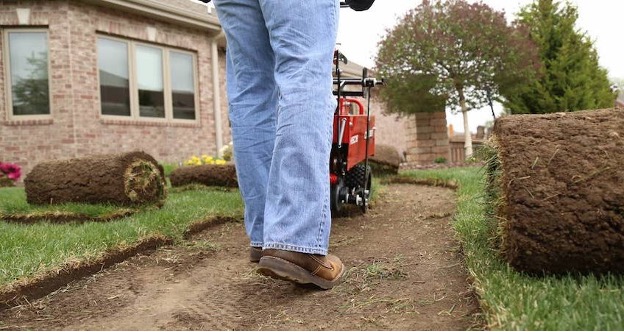
Turf Removal and Water Savings
Water-Thirsty Lawns
A lawn is the pride and joy of any homeowner who often makes it the focal part of their curb appeal. Grass requires a lot of water to remain lush and healthy. Day to day, people around the country run sprinklers or use watering cans, and even though the lawn looks nice, could water be saved by making some changes? If you are evaluating water consumption and expenditure reduction, here are a few things to consider:
Spray Head Irrigation System
In contrast to other plants, turf needs more water to keep it green, and the irrigation system is the usual way of delivery of this precious liquid. Typically, a system uses pop up spray heads that send water up into the air, expecting it to fall onto the ground and hopefully soak into the soil so the roots can take it up. This system wastes a lot of water due to evaporation.
Calculate Your Water Use
To calculate how much water you are using put a bucket to catch the water at one sprinkler head. An average sprinkler head uses four gallons per minute (GPM) or more. Once you know how many GPM each head is using, you can calculate how much water you are using based on how long you are running each head.
For example: If you have a zone (this is an area on your irrigation system that is controlled by one valve) that has 10 heads on it and each head is putting out four gallons per minute, you have 40 gallons of water coming out per minute for that zone. If you run that zone for eight minutes, that is 320 gallons of water that is being used to water just that one section of lawn.
Turf Alternatives
If you still want to gaze at a field of green, you can always turn to artificial turf. Not your look? you can use stones as part of your landscaping. You can cut down the size of the lawn so that it becomes the path you walk on through the garden. This is appealing for those who don’t want to get rid of their lawns entirely, but still want to reduce the amount of water used to maintain it.
Permeable hardscape and mulch include intervening walkways and seating areas where water can penetrate. Hence, bricks and flagstone can be set in sand. Gravel and decomposed granite are other examples. These elements really help to make the design more attractive.
Install Drought-Tolerant Plants
Using drought tolerant and native plants will significantly decrease your water use.
You might find that you are using fertilizers, pesticides and herbicides to maintain your lawn. Frequent watering may increase the need to weed. Over time, this should decrease as you convert to water-friendly practices.
Water Saving Techniques
A great way to decrease water use is to schedule all watering for early morning or at dusk when there is less evaporation from the warmer hours of the day.
Significant water savings can be achieved by watering by hand or changing your irrigation system to a drip system The drip irrigation system will get water where the plants need it, so less chance of water wasted by above-ground spray head evaporation. Most drip emitters use one to two gallons per hour. The drip system will require regular checking as heads can get clogged or pop off.